



10-Day Tanzania Deep South
Ruaha, Selous, and coastal Mafia Island. The southern Tanzania circuit for travellers who have done the north and…
From $3,600 Enquire
Arusha, Tanzania · Est. 2026
+255 628 553 132Rubondo lies in the south-western corner of Lake Victoria and is largely forested — unusual for the lake, whose shores are mostly cultivated. It was gazetted as a national park in 1977.
Between 1966 and 1969 a group of chimpanzees rescued from European zoos and circuses were released on the island. They survived, bred, and their descendants now live entirely wild. A habituation programme means visitors can track them, though sightings are harder-won than at Mahale or Gombe.
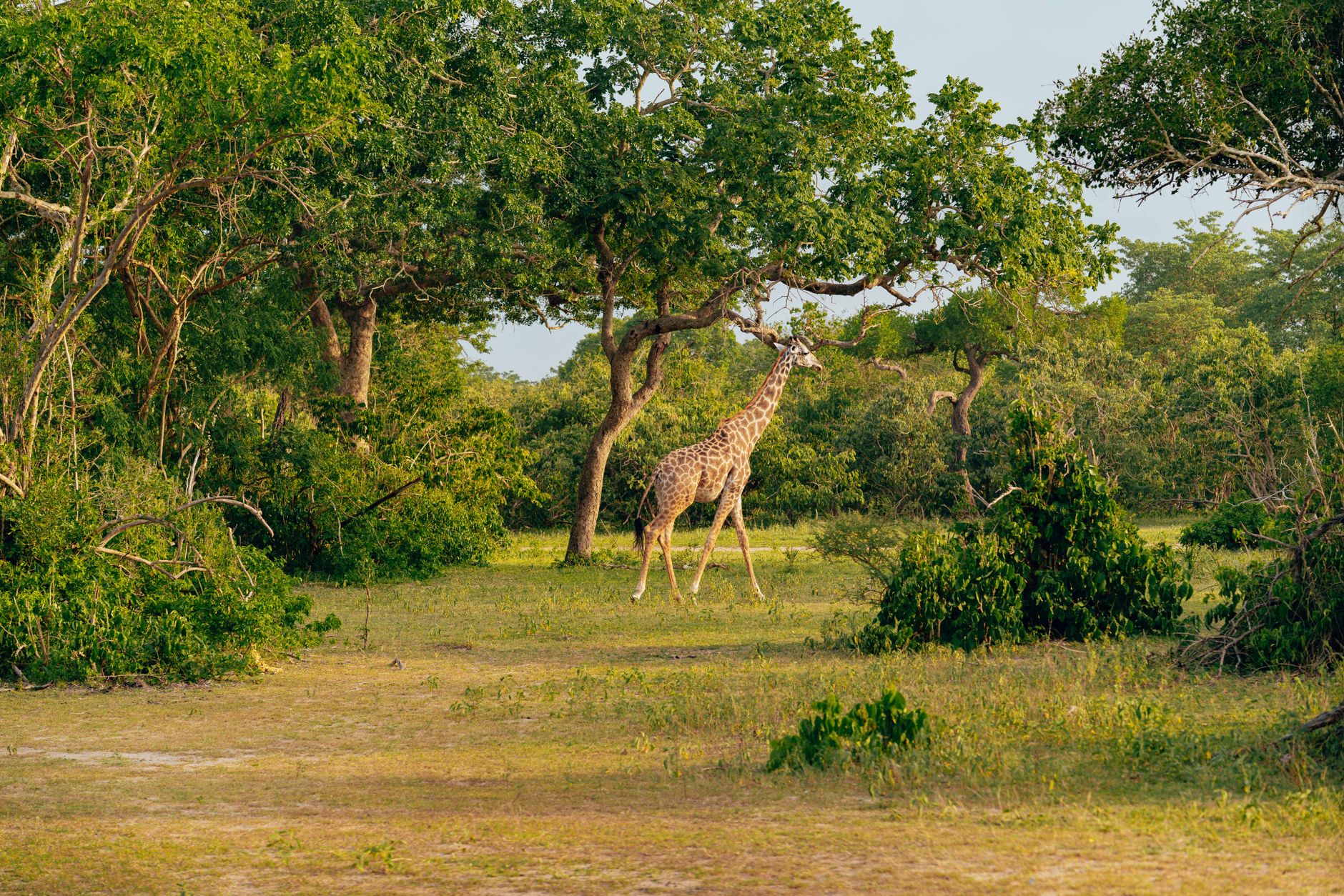
The island also holds elephant, giraffe and sitatunga — the swamp-dwelling antelope for which Rubondo is among the most reliable places in Africa. Birding is exceptional, and the lake offers some of the best Nile perch fishing in East Africa.
Including the ones with inconvenient answers. If something here reads as less reassuring than the usual glossy marketing, that is deliberate.
Wake around 0530 with coffee, out of camp by 0615 while the light is low and predators are still active. Game drive until mid-morning, back for brunch and a rest through the hot middle of the day when animals are inactive too. Out again around 1600 until the park gates close at 1800. Dinner, then bed early because tomorrow starts at 0530 again. Full-day drives with a packed lunch are an option when you are covering distance.
Closer than you expect. Wildlife in the parks is habituated to vehicles and largely ignores them — lions will walk past your wheel arch without lifting their heads. That only holds while you stay inside the vehicle, stay quiet and follow your guide. Standing up through the roof at the wrong moment, or making noise, changes the animal's read of the situation.
Lion, elephant, buffalo and leopard are all likely across a well-planned week. Rhino is the difficult one — the Ngorongoro Crater is the most reliable place in Tanzania for black rhino, and even there it can be a distant sighting. Any operator promising all five is guessing. We will tell you which parks maximise your chances and let the animals do what they do.
Neutral colours — khaki, olive, grey, brown. Avoid dark blue and black, which attract tsetse flies badly in Tarangire and the west. Layers, because dawn is cold and midday is hot. Wide-brim hat, sunglasses, high-factor sunscreen, insect repellent. Binoculars matter more than most people realise; a camera with real zoom matters more than a phone. Soft duffel bags for light aircraft, which have strict weight limits and no space for hard cases.
Most lodges and camps have Wi-Fi, usually satellite-based and slow. Mobile coverage inside the parks is patchy and disappears completely in parts of the Serengeti, Katavi and Mahale. Vodacom and Halotel have the best rural coverage. Most guests find the disconnection is one of the better parts of the trip once they stop fighting it.
Not answered here? Ask us on WhatsApp — a person replies, usually within the hour.
Local guides to Rubondo Island National Park — food, nightlife, day trips, where to stay and how to get around, from people who live here.
In-depth Rubondo Island National Park guides — restaurants, nightlife, day trips and more — are being written. Looking for something specific right now? Ask on WhatsApp and we'll help directly.
Hand-picked expeditions — tell us your dates and we'll route Rubondo Island National Park into your trip.
Ruaha, Selous, and coastal Mafia Island. The southern Tanzania circuit for travellers who have done the north and…
Northern circuit classics, then a flight south to the Rufiji — the two halves of Tanzania that most…
The finest private camps in Tanzania, a hot air balloon over the Serengeti at sunrise, and a private…
Perched on the crater rim 600 metres above the floor. Three separate houses, Maasai butler service, and one…
A private eastern Serengeti sector re-opened exclusively for cheetah recovery. The best cheetah sightings in the ecosystem —…
Five-star hotel standards in the heart of the Serengeti. Infinity pool overlooking a waterhole, spa, fine dining, and…
Tell us your dates and interests — Shaiya replies personally within 24 hours.

Indicative total: $0
Not a checkout. We confirm real pricing and availability before anything is booked.
We are a local assistance contact, not an emergency service. In a life-threatening situation call the numbers below as well as us — and read the note about ambulances.
What's happening?
Your embassy handles lost passports and emergency travel documents. Search “[your country] embassy Tanzania” — or call us and we’ll find it and drive you there.